Embedded database engine for managing
CA-Clipper & FoxPro DBF database files using .NET, Delphi & C++Builder
Award winning technology

Overview
Apollo Embedded includes everything developers need to create native 32-bit and 64-bit Windows and .NET applications that manage CA-Clipper and FoxPro 2.6 DBF/Xbase database files. Developers can create single and multi-user desktop and web-based database applications using Delphi, C++Builder, RAD Studio, Visual Studio Community, Professional and Enterprise editions (C#, VB.NET) with 32-bit and 64-bit support.
The Apollo embedded database engine features a small 1MB footprint that delivers high-performance, low-overhead data management. Apollo applications are smaller, more robust and easier to deploy than applications developed using Jet, MSDE or the BDE. Because of Apollo's small footprint and royalty free Copy 'n Go!™ deployment, applications can be distributed easily over the Internet with no concerns for download size, configuration or licensing.
Includes everything you need!
- DBF Support - CA-Clipper, FoxPro 2.6 files (DBF/NTX/DBT, DBF/CDX/FPT, DBF/NSX/SMT)
- Components - ADO.NET Data Provider, VCL TDataSet
- Database Engine - 32-bit & 64-bit embedded DBF/Xbase database engine with SQL support
- Tools - Apollo DBF Utility for visually managing DBF/Xbase files and the Apollo Query Tool for running interactive SQL commands on DBF files
- Free 2-User Apollo Server - Remote DBF/Xbase data management
Features
Components
- ADO.NET Data Provider for .NET running Visual Studio Community, Professional and Enterprise (C#, VB.NET)
- VCL components for RAD Studio, Delphi and C++Builder
Database engine & SQL support
- Native 32-bit and 64-bit support
- CRUD support for managing DBF/NTX/DBT, DBF/CDX/FPT and DBF/NSX/SMT files
- Small 1MB footprint
- SQL-92 support
- Direct Data Access™ (DDA Speedmode)
- No end-user configuration required
- Single and multi-user support
- Dynamically create and modify databases
- High-speed indexes and Full-Text Search (Traverse 1 million rows in less than 1 second using DDA)
- Thread safe
- Table level and row level locking
- Copy-n-Go™ deployment
- Royalty-free distribution

Database file support
-
100% compatible with CA-Clipper, FoxPro 2.6 and
Apollo database files
(DBF/NTX/DBT, DBF/CDX/FPT, DBF/NSX/SMT) - Apollo can read/write DOS-based Clipper application data files simultaneously with DOS-based Clipper applications and without corrupting indexes (Note: Windows data access is the default)
- Database supports up to 2GB
- Secure encryption
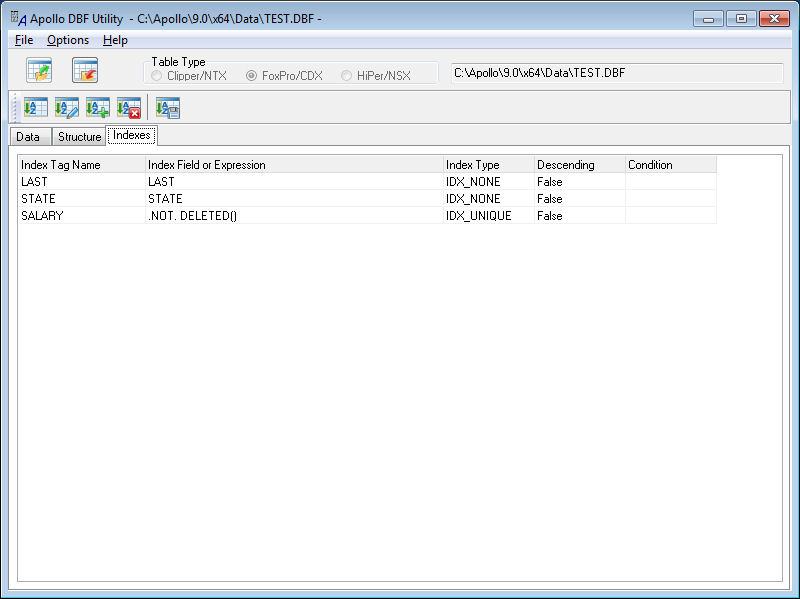
- Compound index support
Components
Apollo components for .NET and VCL are designed to integrate natively into their respective development environments including Borland Developer Studio, Borland Delphi/C++ Builder, Visual Studio and Visual Basic. Each Apollo Embedded component integrates tightly with the included Apollo database engine and with the optional Apollo Server. Click on each of the component sets below to read more.
Note: In previous versions of Apollo, components were packaged individually as specific Apollo editions and sold separately (e.g. Apollo VCL, Apollo .NET, Apollo COM etc.). This is no longer the case. Apollo Embedded now includes all components in one edition.
- TApolloDatabase
- TApolloTable
- TApolloQuery
- ADO.NET Data Provider
- ApolloDataAdapter
- ApolloCommand
- ApolloConnection
- ApolloDataSet
- ApolloDataReader (non-visual)
- ApolloTable (DDA non-visual)
- ApolloDatabase (DDA non-visual)
Database Engine
The Apollo embedded database engine is the underlying low-level technology that is responsible for reading, writing, and updating the DBF/Xbase database files, indexes and memo files. It is included with Apollo 9 Embedded and Apollo 9 Server . The database engine consists of several small .DLL files that total under 1MB in size, and which may be freely deployed with your applications.
Developers are not expected to use the Apollo database engine directly. Instead, use the Apollo Embedded components which seemlessly wrap the engine's API, to develop applications.
Tools
Apollo Embedded includes the following two utilities for managing and working with your data files:
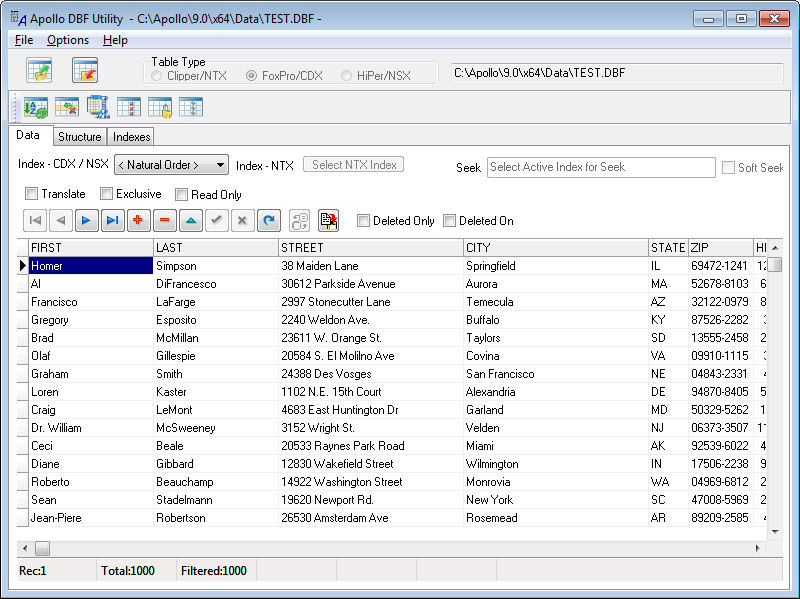
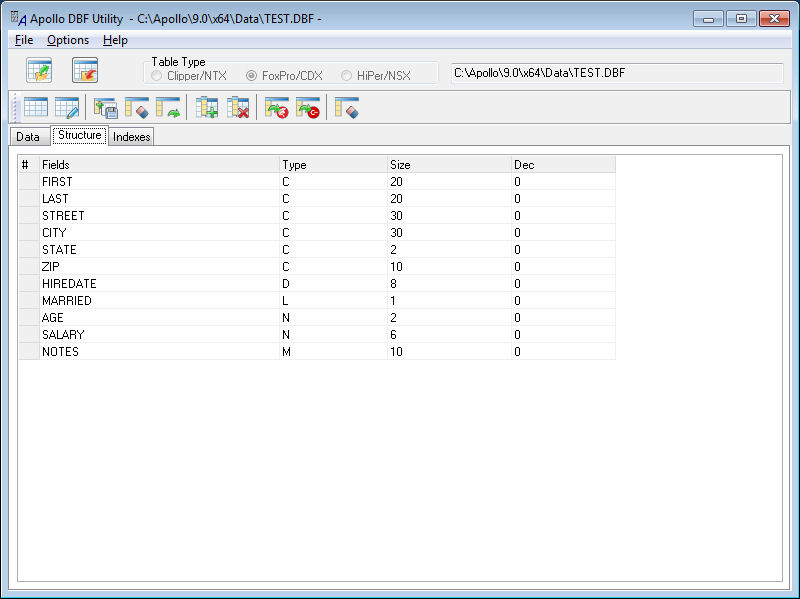
Apollo DBF Utility
- Visually create and manage DBF database structures (schemas) and indexes (CA-Clipper, FoxPro and SIx)
- Visually browse, add, edit and delete data and rows
- Generate Delphi and C++ Source code
- Re-index, pack, and export data
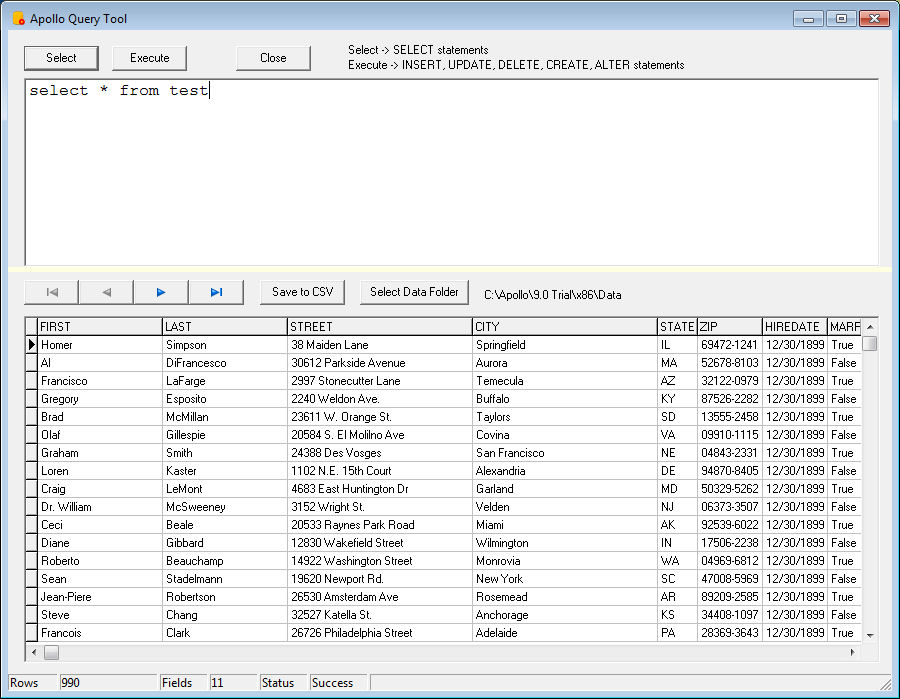
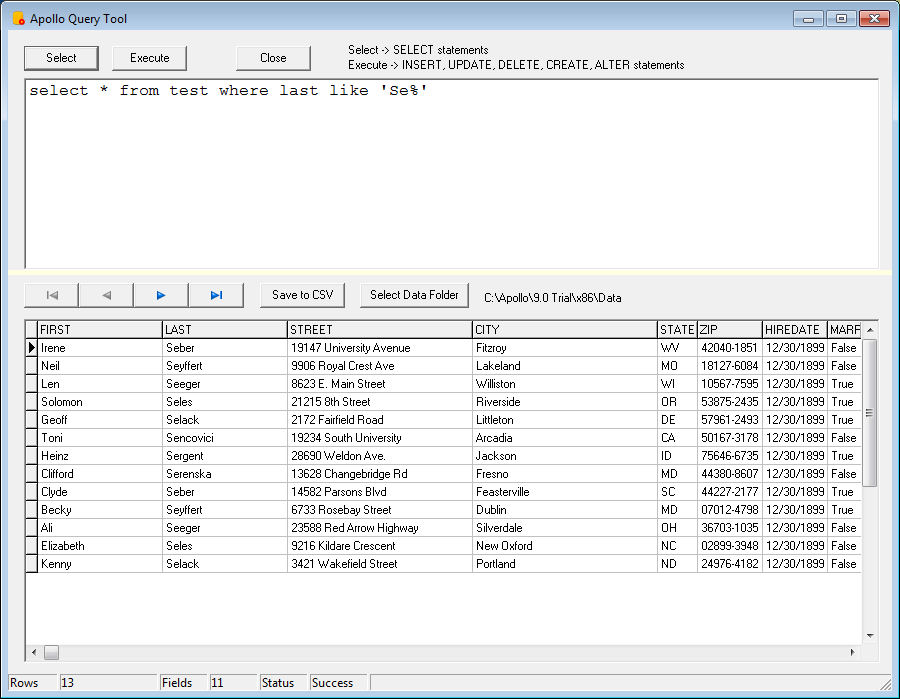
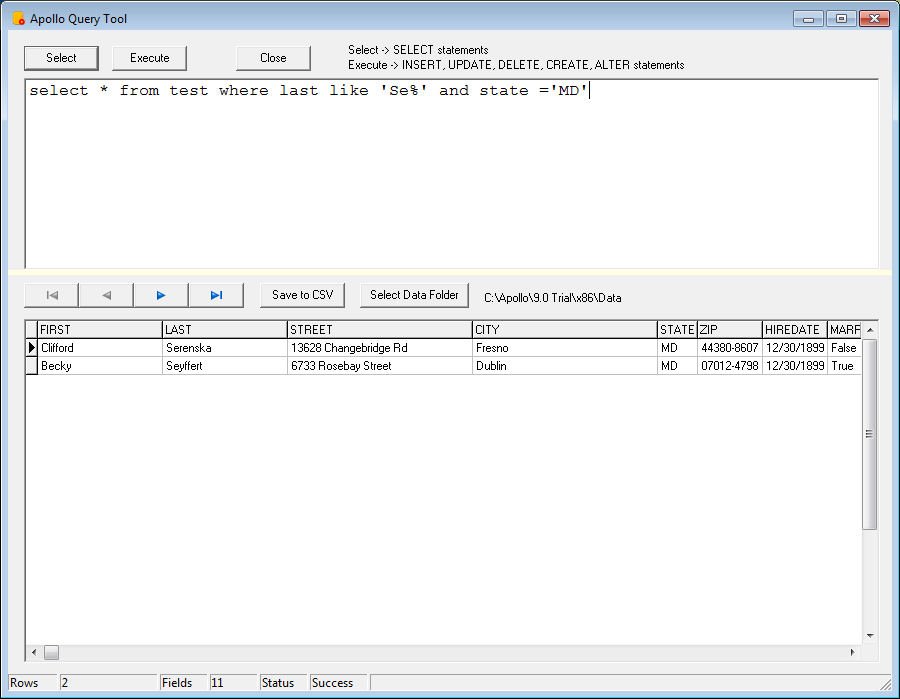
Apollo Query Tool
- Run interactive SQL statements on DBF files
- SELECT, INSERT, UPDATE, DELETE, CREATE, ALTER commands supported
- Export results to CSV files


Other Getting Started
 Apollo is an EXCELLENT product which I use for EVERY application I write which requires a database, and nowadays that means all of them.
Apollo just got Hardcore!
I love your products. Applications I developed with Apollo over the last decade have aced the test of time, with heavy daily use. I purchased the upgrade today.
Congratulations on winning Best Database Engine Award!